Plan-First Home Automation for DIYers
If you’re anything like me, you have been completely seduced by the idea of home automation. Who wouldn't want the incredible convenience of a smart home?
This ultimately led to you buying some smart devices, ready to begin your home transformation... and then, the questions began…
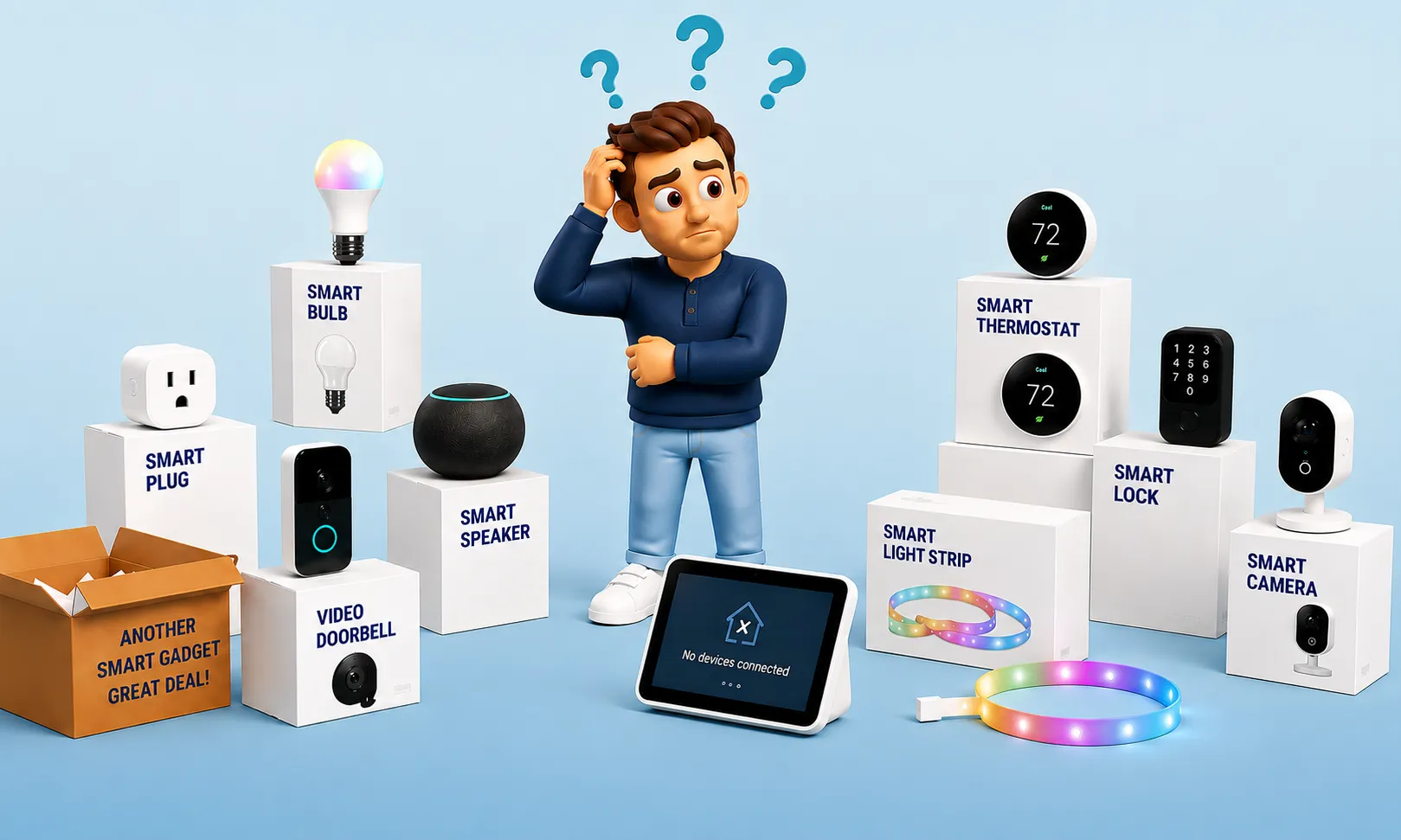
“This smart motion sensor is great...what should I do with it?”
Or maybe…
“This smart light bulb is fantastic — I can turn it on and off with the app...but what’s the point?”
If so, believe me, you are not alone - I’ve been there more times than I care to admit.
I’ve bought multiple smart devices (I can’t help it, I love gadgets), only for them to eventually be consigned to the back of a drawer because I hadn’t really given much thought to how it would be useful in everyday life.
A while back I bought a 'presence multi-sensor'. It cost me roughly £45.00 (about $60.00). It was a pure impulse buy. I thought that I could use it to automate turning the hallway lights on and off at night, rather than leaving a light on permanently...
The problem I discovered was that, unless I also bought the associated ‘smart hub’, I couldn’t access the 'occupancy' feature required to trigger the automation. I didn't want to spend the extra cash at the time and, as a result, the device has been languishing in my desk drawer ever since. It's clear that with even just a little planning, this mistake could have been avoided.
I decided then that I needed to re-evaluate the approach to creating my smart home...
That’s how DomoticsWise came about…
I ultimately concluded that I needed to either stop wasting money and abandon my home automation journey, or take a more considered, cost-effective approach to the whole subject of smart home automation.
Well, I’m much too interested in the subject to just give up on it, so I took the latter option and, through DomoticsWise, I’m keen to pass on the lessons I learned along the way and to help you navigate your home automation journey in the most effective way, both in terms of time and money.
This site promotes a plan-first home automation approach, built around what you want to achieve, why it matters, and how to make it work specifically for you. The main goal is to help DIYers avoid costly mistakes, choose compatible solutions, and build practical automations that work in real homes, for real people — all while avoiding the need for major rewiring of your property or calling in expensive specialists.

Hi, I’m Nick Le Riche. I began my smart home journey over 10 years ago — but, I have to admit, not in the 'smartest' way. I was utterly fascinated by the concept of the smart home, so I started buying devices without putting any real thought into what I was going to do with them.
Before retiring, I worked as an IT System Architect, a practice that always begins with clear, up-front planning. This includes defining clear requirements that not only focus on functionality, but other quality factors, such as reliability, compatibility and, of course, cost constraints.
Through DomoticsWise, I’m applying that same plan-first approach to home automation, including ensuring that automations are grounded in clear, specific goals, that they can be depended on when needed, that the underlying hardware is compatible and that any solution can be achieved within a defined budget.
Explore the Main Areas of DomoticsWise
Whilst home automation inevitably depends on the integration of one or more smart products that use different technologies and hardware, it's extremely tough to tackle the problems you want to solve with a 'bottom up' approach.
Starting with a smart device and trying to build a solution around it based on an unclear objective is at best time consuming and at worst a costly, inconclusive exercise. It generally results in disappointing, unreliable outcomes and my previously described experience with the presence multi-sensor is a good example of this.
The 'top down' approach is the way to go…it's what plan-first home automation is all about...
Before making any buying decisions, it's essential to have a clear vision about the real, everyday problems that you want to solve. What are the constraints that also have to be considered - level of skill, budget, existing ecosystem, etc.? Should things be tackled in a priority order, why is each important?
Only after these requirements have been defined do we begin to think about how to build the solution - the hardware, the protocols, the compatibility question, and so on. This approach has the best chance of delivering the automations that work, are reliable and provide real benefits that enhance everyday life.
Start from where you are on your journey right now, whether you’re just beginning or trying to make better use of the devices you already have.
What is a Smart Home?
New to home automation? Start here for practical guidance on what a smart home is, what can realistically be achieved, and how to begin without wasting money.

Plan-First, Buy Later.
The plan-first home automation mantra. Before buying devices, think through what you want to achieve. This section helps you plan your setup with a clear purpose, so your smart home works as a system rather than a random collection of gadgets.

Smart Devices that Work for You.
Placing a water-leak sensor under a dishwasher is easy and effective. Replacing an entire water-damaged kitchen floor is costly and inconvenient - it happened to me! The focus is on choosing devices that solve your specific problems or improve your everyday living, not just adding tech for the sake of it.

What Platform Should I Choose?
Not all smart home products work well together. Here you’ll learn how platforms, standards, and compatibility affect your choices before you commit to the wrong ecosystem.

Automation - The Real Benefit.
This is where home automation starts to become truly useful. Learn how to connect devices and actions into routines that save effort, add convenience, and make your home feel smarter day to day.

Reliable Everyday Use.
A smart home should be dependable, not frustrating. This section focuses on making your setup practical, stable, and easy to live with over time.
Let's Get Started with Plan-First Home Automation
If you like the idea of home automation but want to avoid unnecessary costs, compatibility headaches, and devices that end up in a drawer, start with the basics first.
My Getting Started section will help you understand what is realistically possible when it comes to smart home automation, how to think about it in a practical way, and how to begin with a clear plan before spending your hard-earned cash.